
Meet Charlotte Perriand
Published on May 4, 2026
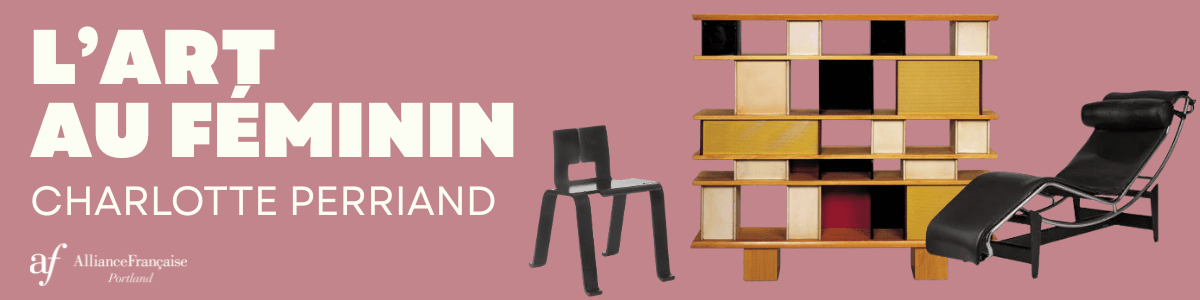
Ces pièces pourraient sortir d’un catalogue contemporain… et pourtant, elles ont été imaginées il y a plusieurs décennies. Derrière ces formes qui nous paraissent aujourd’hui évidentes se trouve Charlotte Perriand, figure majeure du design moderne et de la pensée de l’habitat au XXe siècle.
Formée dans l’effervescence des avant-gardes, elle rejoint dans les années 1920 l’atelier de Le Corbusier et Pierre Jeanneret, où elle participe à la définition d’un mobilier pensé comme prolongement de l’architecture. Si certaines pièces emblématiques, comme la chaise longue LC4, naissent de cette collaboration collective, son rôle est déterminant dans l’évolution des usages, des matériaux et de la relation entre corps et espace.
Très tôt, elle développe une approche fondée sur la simplicité des lignes, la légèreté des structures et l’usage de matériaux industriels comme le métal, l’aluminium et le bois. Cette recherche se prolonge tout au long de sa carrière, notamment avec Jean Prouvé, autour d’un mobilier modulable pensé pour s’adapter aux modes de vie.
Ses systèmes d’aménagement, ses étagères et bibliothèques, et ses dispositifs évolutifs traduisent une même ambition, concevoir un espace cohérent où l’architecture et le mobilier fonctionnent ensemble.
Aujourd’hui, les codes qu’elle a contribué à définir, minimalisme, structures apparentes et flexibilité des usages, sont devenus centraux dans le design contemporain. Mais chez Perriand, ils ne relèvent pas d’une tendance, ils découlent d’une vision cohérente de l’habitat, où le mobilier s’inscrit dans un projet global au service de la vie quotidienne.
These pieces could come from a contemporary catalogue, and yet they were designed several decades ago. Behind these forms that now seem so obvious lies Charlotte Perriand, a major figure of modern design and of thinking about living spaces in the 20th century.
Trained in the vibrant context of the avant-garde movements, she joined in the 1920s the studio of Le Corbusier and Pierre Jeanneret, where she contributed to defining furniture conceived as an extension of architecture. While some iconic pieces, such as the LC4 chaise longue, emerged from this collective collaboration, her role was crucial in shaping ideas about use, materials, and the relationship between the body and space.
Very early on, she developed an approach based on simplicity of form, lightweight structures, and the use of industrial materials such as metal, aluminium, and wood. This exploration continued throughout her career, notably with Jean Prouvé, through modular furniture designed to adapt to ways of living.
Her storage systems, shelving, and adaptable devices reflect a consistent ambition: to design a coherent space where architecture and furniture work together.
Today, the principles she helped establish, minimalism, exposed structures, and flexible use, are central to contemporary design. But in Perriand’s work, they are not a trend; they stem from a coherent vision of living spaces, where furniture is part of a broader project serving everyday life.
French Conversation Through Art
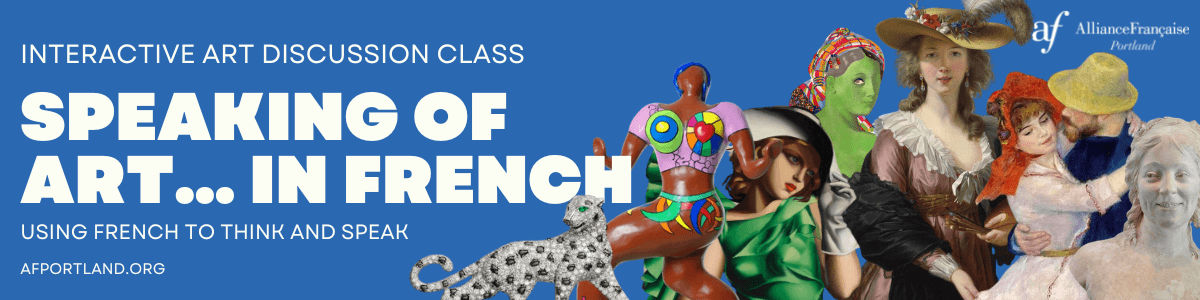
Looking for an engaging and stimulating way to improve your French through culture and conversation?
Our Art History conversation class is currently in session, bringing together participants to explore women in art through discussion, visual analysis, and cultural exchange.
Discover a different way to learn French through culture, images, and conversation. This interactive class follows a conversation-group approach, exploring artworks across eras, styles, and artistic movements. Through guided discussion and group exchange, participants develop their spoken French in a rich and immersive context, led by Elene Zedginidze (École du Louvre graduate).
- 5-week course
- 2-hour sessions
- Focus on French conversation, art, and cultural discovery
- No prior art knowledge required
French conversation class | French conversation group style | cultural French learning through art
This summer, we will also offer a series of standalone workshops, including a special session dedicated to Charlotte Perriand—an opportunity to explore a single artist in depth while practicing your French. Interested in joining us? Visit our registration page to learn more about upcoming sessions and be the first to know when enrollment opens.
CONTACT US
PARKING
Street parking on SW 20th St. facing the Kamm House is limited. Free parking is available in Lot A at SW 18th and SW Columbia. Please obtain a parking pass from the office. After 6 pm weekdays, students may park in the Willamette Dental lot at SW 20th and SW Jefferson as available.OFFICE HOURS
The Alliance office is open Mon–Thu, 10 a.m.–5 p.m., and Fri, 10 a.m.–3 p.m., plus during evening and Saturday classes. Check our homepage for occasional closures.Call us at 503.223.8388 during business hours or leave a message.
Email us at info@afportland.org.
FOLLOW US
ALLIANCE NEWSLETTER